Sinking Funds Tracker
Car insurance, holiday gifts, annual subscriptions — none of them are emergencies, and all of them wreck a monthly budget. Sinking funds fix that, and this spreadsheet does the maths for you.
Buy for $8 Instant download · secure checkout via Gumroad
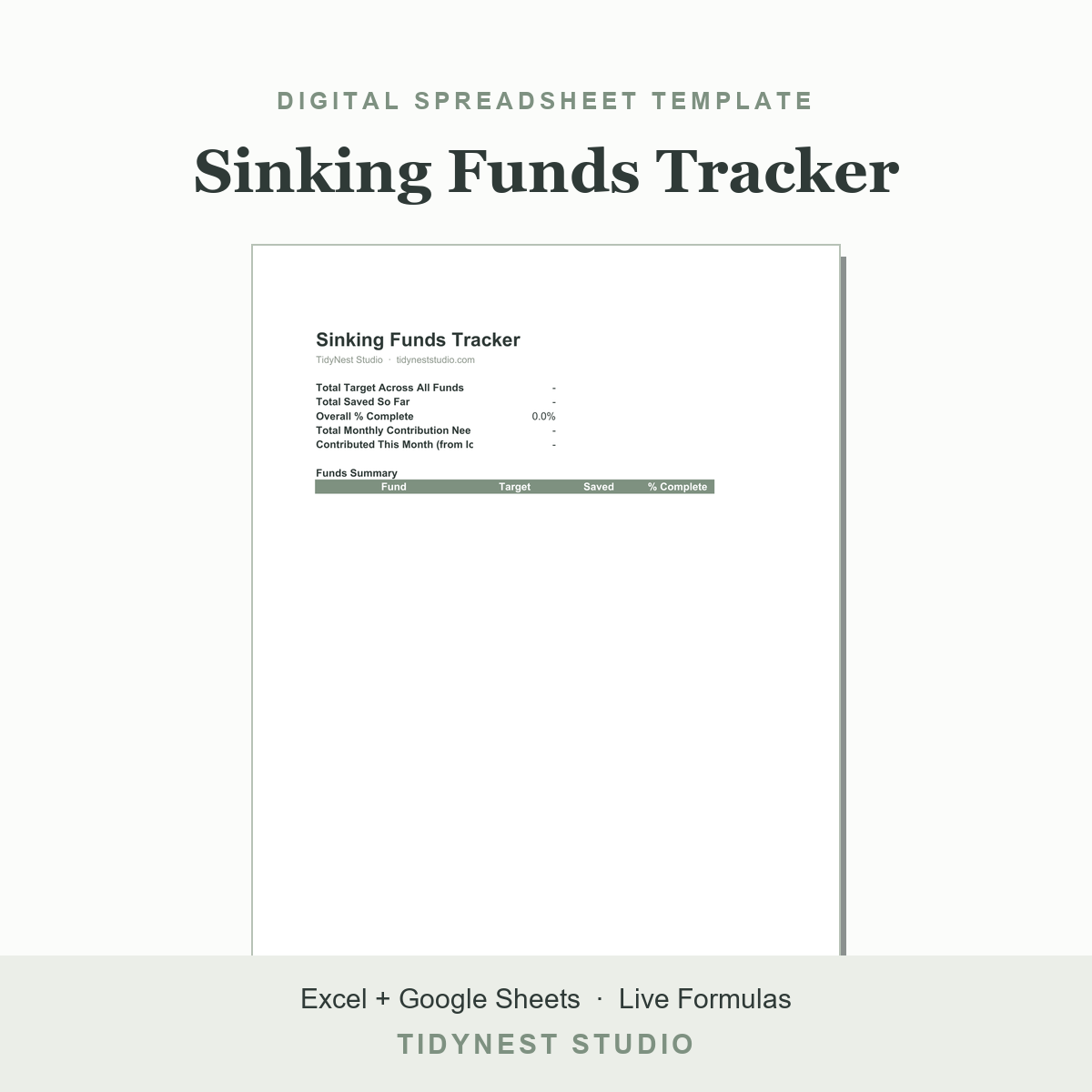
What's inside
- You enter the target amount and the date it is due
- It calculates exactly how much to set aside each month
- Tracks every fund and shows your total monthly contribution at a glance
- Recalculates automatically when a target or date changes
Details
- Works in Microsoft Excel and Google Sheets
- Formulas already built in
- Instant digital download
Who it's for
For the budget that works until December. Sinking funds are the answer to expenses that are neither monthly nor emergencies — car insurance, Christmas, the annual subscription, the service, the school trip. The trick is arithmetic nobody enjoys: target amount divided by months remaining, recalculated every time a date or figure changes. The spreadsheet does that for every fund at once and totals what you should be setting aside this month, which is the single number that belongs in your monthly budget.
How to use it
- List every irregular expense with its target amount and the date it is due. Last year's statements are the fastest source.
- Let the sheet calculate the monthly contribution per fund, then read the total at the bottom — that is your real monthly cost of living.
- Put that total into your monthly budget as one fixed line rather than tracking each fund separately.
- Record contributions as you make them; the sheet shows each fund's progress and flags any that has fallen behind.
- When a fund is spent, reset its target and date for next year instead of deleting it — most of these expenses repeat.
Questions
How is a sinking fund different from an emergency fund?
An emergency fund is for what you cannot predict — job loss, a boiler dying. A sinking fund is for what you can: an insurance renewal has a date and a price. Keeping them separate stops predictable bills from draining the money meant for genuine emergencies.
Do I need separate bank accounts for each fund?
No. Most people keep one savings account and let the sheet track who owns what within it. Separate pots or jars work too if your bank offers them, but the arithmetic is the same and the tracker is what tells you the split.
What if I cannot afford the total it calculates?
That total is useful information rather than a demand: it means your real annual cost exceeds your current plan. Fund the dated, unavoidable ones first — insurance, tax, servicing — and treat gifts and holidays as what flexes.
This is a digital product — nothing is shipped. Files are available to download immediately after checkout.